Published Wednesday, August 19, 2026 in The Everett Herald
Officials Gather Feedback on Everett, CT Merger at Open House
By Will Geschke
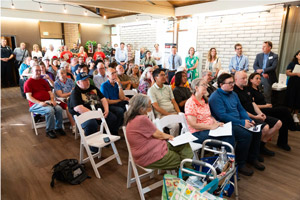
Dozens of community members packed into a south Everett room on Tuesday to share feedback with officials regarding a potential merger of Everett Transit and Community Transit. In April, the city and Community Transit announced they were resuming talks over the possibility of consolidating their two transit agencies, an idea that has been floated and studied for years.
Everett and Community Transit have considered the possibility of consolidating their two transit agencies since before the COVID-19 pandemic in 2020. If it goes forward, Everett Transit would cease operations; Community Transit would take over. It’s likely that it would lead to a significant increase of transit service within the city, but it would come with a significant sales tax hike as well. Everett Transit charges a 0.6% sales tax for its operations while Community Transit charges 1.2%.
Officials have said that both Community Transit’s board of directors and Everett’s city council will consider voting on whether to approve a possible interlocal agreement to merge the two agencies as soon as October. On Tuesday, they hosted an open house at Everett’s Walter E. Hall Park as a way to gather feedback from residents of the area and employees of the affected transit agencies before finalizing a draft consolidation plan, expected to be made public in September.
Previous studies into a potential merger resulted in a 78-page report, completed in 2023, outlining a possible combined bus network if Community Transit was to absorb Everett Transit. That report showed a possibility of improved frequency on Everett Transit’s existing 10 routes, while five additional bus routes could be added within the city if a merger went forward. But that work looking into consolidation halted in 2024, as both agencies focused on near-term transit improvements, according to a 2024 document written by the city and the transit agency.
Everett Mayor Cassie Franklin said at the open house that the consolidation of the two agencies would help meet fast-growing demand for transit in the city.
"No one likes taxes, but what those taxes go to is to provide more robust transportation services," Franklin said. "The city isn’t allowed to collect as much taxes as Community Transit can, they can reinvest those taxes to ensure that we have a robust transit system for our growing community."
The merger would also be an opportunity to address inefficiencies that exist in the current system that Everett residents use, Community Transit CEO Ric Ilgenfritz said.
"We’ve ended up with networks that collide with each other in certain places. We’ve ended up with connections between destinations that aren't as great as they could be, and service that isn't as frequent as it could be, that doesn't run over the course of the day as long as it could," Ilgenfritz said. "The opportunity we have is to join forces and leverage each other's strength and each other's resources to build something that’s bigger and better and more in service of the community than exists today."
The idea of a merger has divided the opinions of residents, transit employees and transit users. Opponents, including Everett Transit’s union representing drivers and maintenance workers, have concerns about the tax increase that would come with the merger, the relinquishing of Everett’s local control of its transit system, changes to the availability of paratransit service and potential impacts to employees.
"We like our system as it is, I think that our customers, the citizens of Everett, like it as it is," said Elizabeth Chamberlin, an Everett Transit driver at the open house.
Chamberlin said that Everett Transit already provides high-quality service that doesn’t need changing.
"I don't know how they’re going to put more service in there, and if they do, I don’t see that it’s going to make it better," Chamberlin said. "All of our routes end up at Everett Station or the South Everett Freeway Station, so it makes it very easy for them to get where they’re going."
Everett offers a wider availability of paratransit service than it’s required to provide under federal law. Its paratransit buses serve individuals with disabilities, as well as individuals who are 65 and older. Franklin said Wednesday that those who currently qualify would continue receiving paratransit service into the future if a merger goes through.
The eligibility requirements would likely change in future years, however, city staffer Jennifer Gregerson said at an Aug. 12 council meeting. Once the merger goes into effect, Everett's eligibility rules would change, limiting paratransit's availability to those who qualify under the Americans with Disabilities Act: people who cannot use fixed-route buses due to a disability. Under current plans, those who turn 65 after the merger goes into effect would no longer automatically qualify for paratransit service.
Also a point of contention: Everett voters may not have a direct say on the merger. Consolidation used to require voter approval, but a new state law approved in 2025 allowed public transit benefit areas, known as PTBAs, like Community Transit to take over city transit agencies via an interlocal agreement, approved by both the City Council and the transit agency’s board of directors.
"I think it’s upsetting that they take the right for them to vote on this away," Chamberlin said. "If this goes through, their transit tax will double, their fares will go up."
"Great service as it is," said Daryle Sullivan, another Everett Transit driver. "Why change it? Just to raise taxes and fares?"
Others, however, argue the increase in bus service that would likely come from consolidation is well worth the extra money raised from sales taxes. Higher frequency and more routes within the city could encourage more people to ride transit, at a time when the population of Everett — and the surrounding region — is expected to grow significantly over the next 20 years, Franklin said. Officials at Community Transit and at the city have also committed to making sure Everett Transit employees retain their jobs without reductions in pay or benefits.
Nathaniel Reyes, a resident of Everett's Pinehurst-Beverly Park neighborhood, is excited about the possibility of the merger because, in his experience, it takes far too long to take transit to areas outside of city limits.
"Anyone who’s had to use this network like me knows how hard it is to leave the city on this network," Reyes said at the open house Tuesday. "… It takes so long to transfer between regional routes and city routes."
Reyes hoped that if a merger went through, added connections outside of the city, combined with later operating hours for bus lines, would allow him to attend late events like Seahawks games without getting in a car.
"It’s a Byzantine way of doing things," Reyes said of the city-only network. "The reason PTBAs exist, the reason that countywide agencies like King County Metro exist, is because they can plan on a large scale and not have this isolated colony."
Regarding the sales tax increase, Reyes said the added service would be worth the cost.
"The rest of the county is handling it fine," he said.
Ethan Chernicoff, who lives on Mercer Island, said when he visits Everett, transferring to Everett Transit buses after arriving in the city can lead to wait times as long as 40 minutes. He supported the merger because increased service could cut down on wait times due to higher frequency.
"It’ll make getting around here way easier,” Chernicoff said at Tuesday’s open house. “It means the local connections, the regional connections are even smoother."
Everett and Community Transit expect to release a draft of the potential interlocal agreement to the public in September, city officials said earlier this month. Before then, they will continue to gather feedback from residents. An online survey hosted by Everett and Community Transit will remain available at bit.ly/etctsurvey.
Ilgenfritz said he’s hoping hear from residents about their concerns, so they can be addressed in the planning process, and to get ideas as to where transit services can best grow.
"What kind of changes do they want to see?" Ilgenfritz said at the open house. "We’ve got an opportunity here to elevate the transit network, so I’m really eager to hear people’s thoughts on that."
The City Council and Community Transit’s board are expected to vote on whether to go forward with annexation as early as October. If they decide to consolidate the transit agencies, Community Transit could begin implementing an integrated bus network by March 2028. It could take as long as four years beyond that for an integrated network to be fully put into place.
https://www.heraldnet.com/2026/07/17/union-pickets-as-negotiations-with-community-transit-continue/